
Key Takeaways
SEO for fishing lodges has become simpler, not harder. Fly-in destinations have a natural advantage: high-intent searchers who know what they want. The key is clarity, not tricks.
- SEO helps search engines understand you—it doesn't manipulate them. Good SEO is foundational and largely one-time, not an ongoing emergency.
- Being niche is leverage. Fly-in lodges serve anglers actively researching once-a-year trips—valuable intent that's surprisingly underserved.
- Focus beats volume. 4-5 well-written evergreen pages outperform dozens of generic ones.
- AI rewards explanation, not optimization tricks. If your content helps real anglers understand the trip, it helps AI recommend you.
- Trust signals matter more for remote destinations. Reviews, real photography, and consistent business info anchor your lodge geographically.
If you run a fishing lodge, you've likely been told your website is at risk—that a Google update is coming, that AI is changing everything, that you need to act now or lose bookings.
The reality is simpler and more encouraging. SEO hasn't become more dangerous—it's become more straightforward. For fishing lodges, especially fly-in destinations, that's good news. This guide covers what SEO actually does in 2025, how AI factors into discovery, and what matters for lodges offering experiences like fly-in walleye fishing in Ontario.
What SEO Is Really Meant to Do
SEO has one job: help the right people find the right experience at the right time. For fishing lodges, that means clearly communicating what you offer, where you're located, how guests get there, and why the trip is worth it.
| What SEO Does | What SEO Doesn't Do |
|---|---|
| Helps search engines understand your lodge | Generate instant results |
| Builds stable, long-term visibility | Guarantee rankings |
| Works quietly in the background once set up | Require constant monthly tinkering |
| Compounds reputation over time | Replace paid advertising |
If SEO feels frantic or constantly on the verge of "breaking," something is off. Good SEO is foundational—like maintaining your dock or aircraft landing area. Solid and reliable, not constantly rebuilt.
Why Fishing Lodges Have a Natural Advantage
Fly-in lodges serve high-intent searchers. Anglers looking for fly-in fishing in Ontario aren't casually browsing—they're researching once-a-year trips, comparing options, and imagining themselves there. This intent is valuable and surprisingly underserved.
Why most lodge websites underperform:
- The experience isn't explained clearly enough
- Vague descriptions make it hard for search engines and AI to understand what you offer
- Generic copy blends in with competitors
When your lodge communicates with clarity—about fly-in access, species, seasonality, remoteness, and what a week actually feels like—you immediately stand out.
Being niche isn't a weakness. It's leverage.
The Pages That Do the Heavy Lifting
Focus beats volume. Dozens of pages with vague copy don't help anyone. A strong lodge website needs 4-5 well-written, evergreen pages:
| Page | Purpose |
|---|---|
| Homepage | Immediately communicate you're a fly-in fishing lodge in Ontario and who the experience is for |
| Fly-in Fishing | Walk someone through what the trip actually looks like, from arrival to departure |
| Species (Walleye) | Capture specific search intent while educating guests on seasonality and behavior |
| Practical Info | How guests get there, what packages include, what a typical week feels like |
These pages reduce friction and increase booking confidence. You don't need more pages—you need the right ones.
How AI Search Fits In
AI tools like ChatGPT and Google's AI Overviews rely on the same thing search engines always have: clear, descriptive, trustworthy content. AI doesn't reward tricks—it rewards explanation.
Content that helps AI recommend you:
- Clear explanations of fly-in logistics and what to expect
- Fishing seasons and species behavior for your location
- Answers to real questions: "Is fly-in fishing worth it?" "When is walleye fishing best?" "What should I pack?"
You don't need to "optimize for AI" separately. If your content helps a real angler understand the trip, it helps AI understand it too.
Trust Signals Matter More for Remote Destinations
Trust signals matter more when guests are traveling far. Search engines and AI look for signs your business is legitimate, established, and well-regarded:
- Reviews and testimonials — social proof from past guests
- Consistent business information — same name, address, phone across all platforms
- Real photography — authentic images of the lodge, cabins, and catches
- Google Business Profile — properly set up and maintained
These elements anchor your lodge geographically and help bookings. People want reassurance before committing to a fly-in trip.
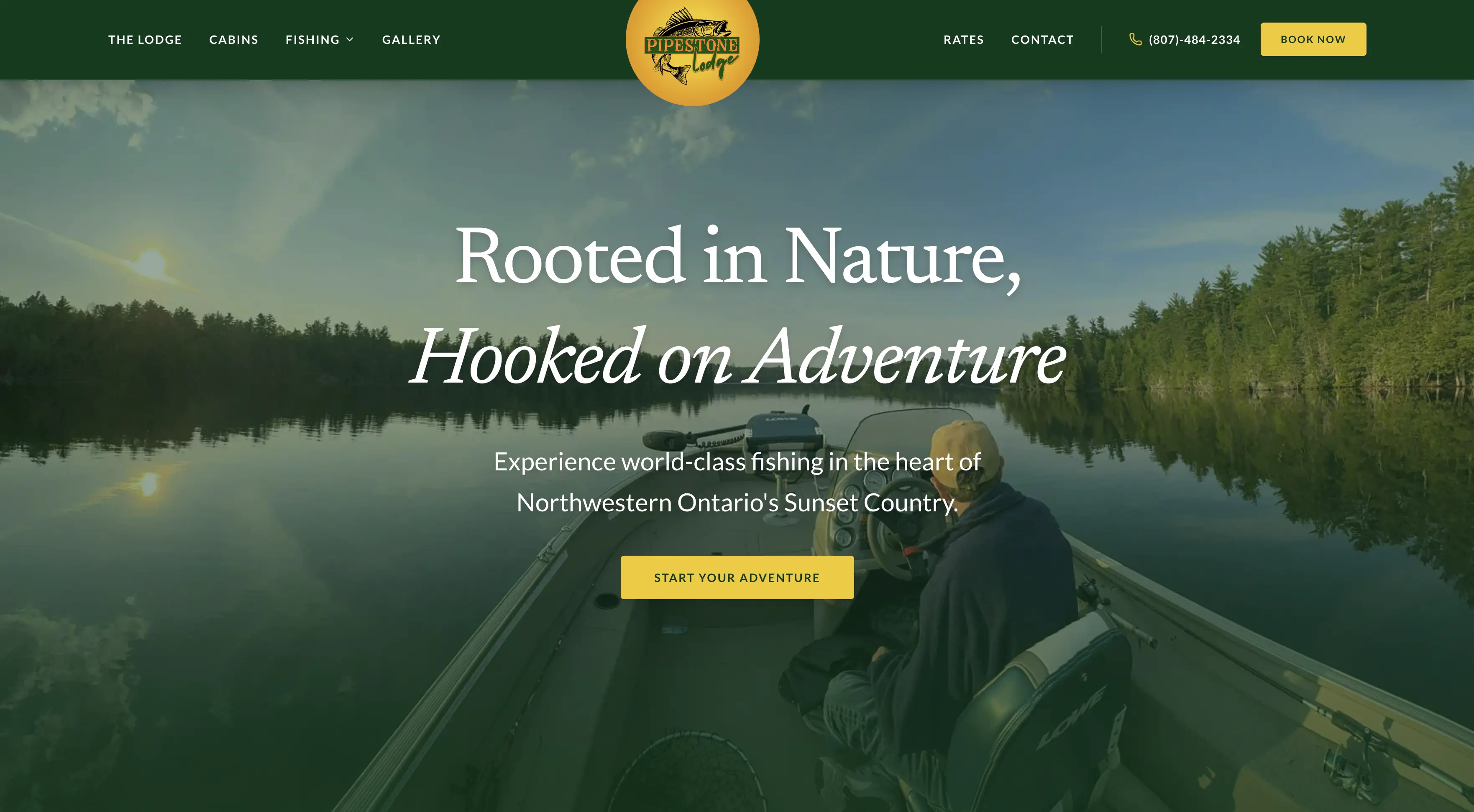
From our work: We designed and built the Pipestone Lodge website with these exact trust signals in mind: authentic photography of the lake and cabins, clear fly-in logistics, and a Google Business Profile that anchors the lodge geographically. The result is a site that's already gaining traction in a competitive niche.
SEO vs Paid Ads: Different Jobs
| SEO | Paid Ads |
|---|---|
| Builds long-term visibility | Captures immediate demand |
| Compounds year after year | Fills gaps during booking windows |
| Foundational, largely one-time | Ongoing spend required |
The strongest strategy: A solid SEO foundation supported by occasional, well-timed paid campaigns. One feeds the other. Neither replaces a clear, trustworthy website.
See It in Action: Pipestone Lodge
We recently designed and built the website for Pipestone Lodge, a fly-in fishing destination on Pipestone Lake in Northwestern Ontario. It's a ground-up build: logo, brand identity, content strategy, and a performant Next.js site, all designed specifically around the principles in this article.
Why it works: Instead of spreading thin across dozens of blog posts, the site focuses on a small number of pages that do the heavy lifting. The Fly-in Fishing page walks anglers through the full trip experience. The Species pages target high-intent searches like "walleye fishing Northwestern Ontario." Clear logistics, authentic photography, and fast load times handle the rest.
When SEO Is Working, It Feels Quiet
The best SEO doesn't shout. It ensures that when someone searches for a fly-in walleye fishing experience in Ontario, your lodge is clearly understood, easy to trust, and hard to ignore.
If your website tells your story well, search engines and AI tools will follow—and over time, the right anglers will too.